
Azure VNet Peering vs. Virtual WAN: What’s the Difference?
When building a robust cloud infrastructure on Microsoft Azure, connecting your Virtual Networks (VNets) is one of the most foundational architecture decisions you will make. As your organization grows, managing traffic securely and efficiently across regions and subscriptions becomes critical.
Two of the most popular networking solutions in Azure are VNet Peering and Azure Virtual WAN. While both connect virtual networks, they are designed for very different scales and use cases. Let’s break down the differences to help you choose the right approach for your cloud environment.
What is Azure VNet Peering?
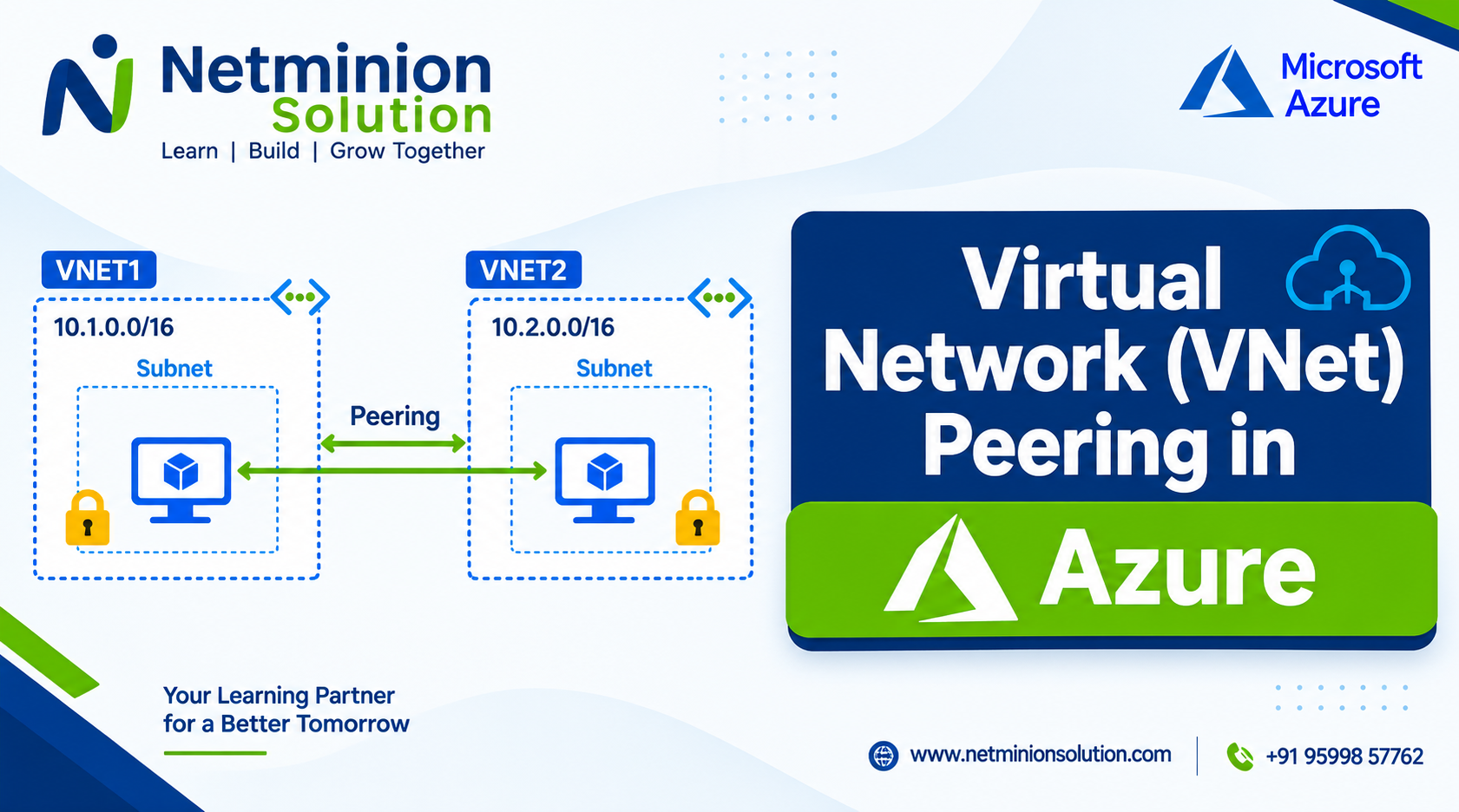
Azure VNet Peering connects two Azure VNets directly using the Microsoft backbone network. Once peered, the two VNets appear as a single network for connectivity purposes, ensuring low-latency and high-bandwidth traffic flow without going over the public internet.
- Key Architecture: Direct, point-to-point connections between VNets. You can build a manual Hub-and-Spoke topology by configuring gateway transit, but you manage the routing tables yourself.
- Best For: Simple architectures, regional or cross-region connections between a limited number of VNets, and environments where you want granular control over custom routing.
- Pros:
- Low latency and high throughput.
- No gateway required for basic peering.
- Cost-effective for smaller, predictable setups (you only pay for data transfer).
- Cons:
- Becomes complex to manage as the number of VNets grows (scaling is non-transitve by default unless using user-defined routes or a hub).
- Lacks native branch-to-office or SD-WAN integration out of the box.
- AZ-900
What is Azure Virtual WAN?
Azure Virtual WAN is a networking service that brings many networking, security, and routing functionalities together into a single operational interface. It provides a native Hub-and-Spoke architecture optimized for large-scale, enterprise branch-to-cloud and cloud-to-cloud connectivity.
- Key Architecture: Built around a managed “Virtual Hub” deployed by Microsoft. VNets, VPN gateways, ExpressRoute circuits, and User VPNs all connect into this central hub.
- Best For: Large enterprises, global multi-region deployments, organizations integrating SD-WAN appliances, and scenarios requiring centralized security and automated routing.
- Pros:
- Automated Routing: Eliminates the need to manage complex user-defined routes (UDRs) across multiple VNets.
- Unified Management: Integrates site-to-site VPN, ExpressRoute, and remote user access into one dashboard.
- Scalability: Effortlessly handles hundreds of branches and VNets globally.
- Cons:
- Higher base cost due to the Virtual Hub deployment fees.
- Overkill for small-to-medium deployments or simple multi-VNet architectures.
At a Glance: Key Differences
| Feature | Azure VNet Peering | Azure Virtual WAN |
| Architecture Type | Direct point-to-point mesh or manual hub-and-spoke | Automated Hub-and-Spoke (Microsoft-managed hub) |
| Scale | Best for dozens of VNets | Built for hundreds of VNets and global branches |
| Routing Management | Manual (requires UDRs or custom configurations) | Automated (dynamic routing within the virtual hub) |
| Branch/SD-WAN Integration | Requires separate VPN/ExpressRoute gateways | Native integration with third-party SD-WAN and VPNs |
| Pricing Model | Pay-per-GB for data transfer | Hub deployment fee + scale units + data transfer |
Which One Should You Choose?
Choosing between the two comes down to your organization’s scale, complexity, and networking budget:
Choose VNet Peering if: You are managing a straightforward cloud environment, connecting a handful of production and staging VNets, or want complete control over your custom routing tables without paying for managed hub infrastructure.
Choose Virtual WAN if: You are an enterprise architect designing a global footprint, need to connect numerous branch offices via SD-WAN, or want to offload complex routing and security management to a fully automated Microsoft-managed hub.
Conclusion
Both Azure VNet Peering and Virtual WAN are powerful tools in the Azure networking arsenal. VNet Peering shines in simplicity and cost-efficiency for targeted connections, while Virtual WAN acts as the ultimate enterprise backbone for massive, globally distributed cloud estates. Assessing your long-term growth and traffic patterns will point you toward the ideal architectural fit.
Need help designing or scaling your cloud infrastructure? Reach out to us at Netminion Solutions via info@netminion.net!